Reanal Finomvegyszergyár
Explore the abandoned Reanal factory in Budapest—an eerie chemical lab frozen in time, filled with glassware, notes, and lingering scents.
The Reanal Finomvegyszergyár factory, located on the outskirts of Budapest, Hungary, was once a key player in the country’s chemical and pharmaceutical industry. Built during the socialist era in the mid-20th century, the site focused on producing fine chemicals, reagents, and laboratory-grade substances used in research, medicine, and industrial applications. At its peak, Reanal didn’t just supply Hungary; it exported across Eastern Europe, becoming an important part of the scientific infrastructure behind the Iron Curtain.
Over time, the name “Reanal” became well known throughout Hungary, printed on chemical bottles found in universities, hospitals, and research labs. The factory itself was a large complex, made up of production halls, storage areas, office buildings, and—most interesting for urban explorers—a dedicated laboratory wing used for testing, development, and quality control. After the political and economic changes of the 1990s, the factory struggled to keep up in a more competitive global market. Production slowed, parts of the site were shut down, and eventually the entire facility was abandoned.
Exploration of the Laboratory
We explored this abandoned factory in early summer, under a bright blue sky that felt almost out of place. Entry was surprisingly easy, a hole in the fence led us past a few crumbling outbuildings and straight toward the main complex. The laboratory building immediately stood out, with rows of boarded-up windows hinting at what was inside. Even before entering, there was a faint chemical smell in the air sharp, slightly sweet, and strangely persistent.
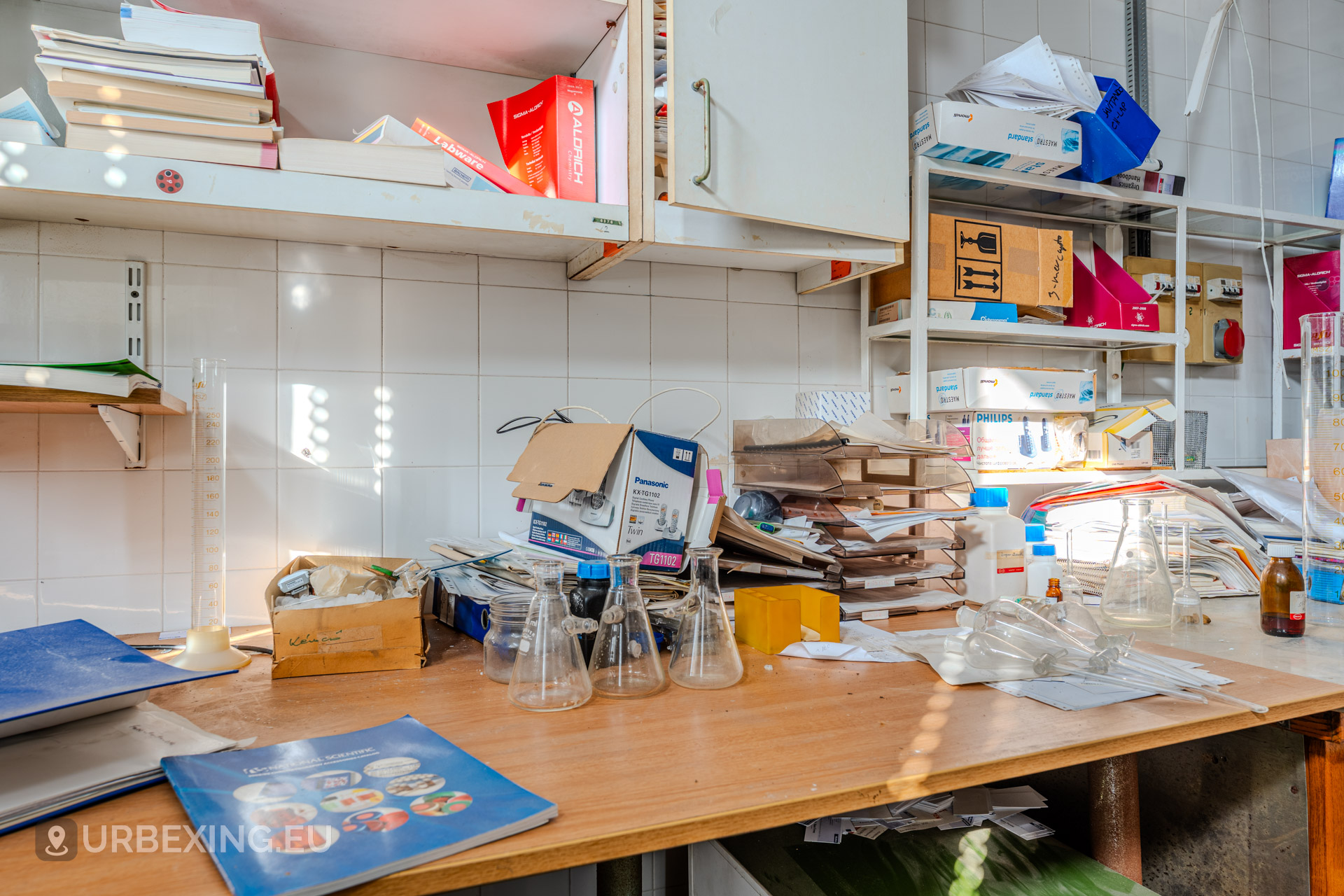
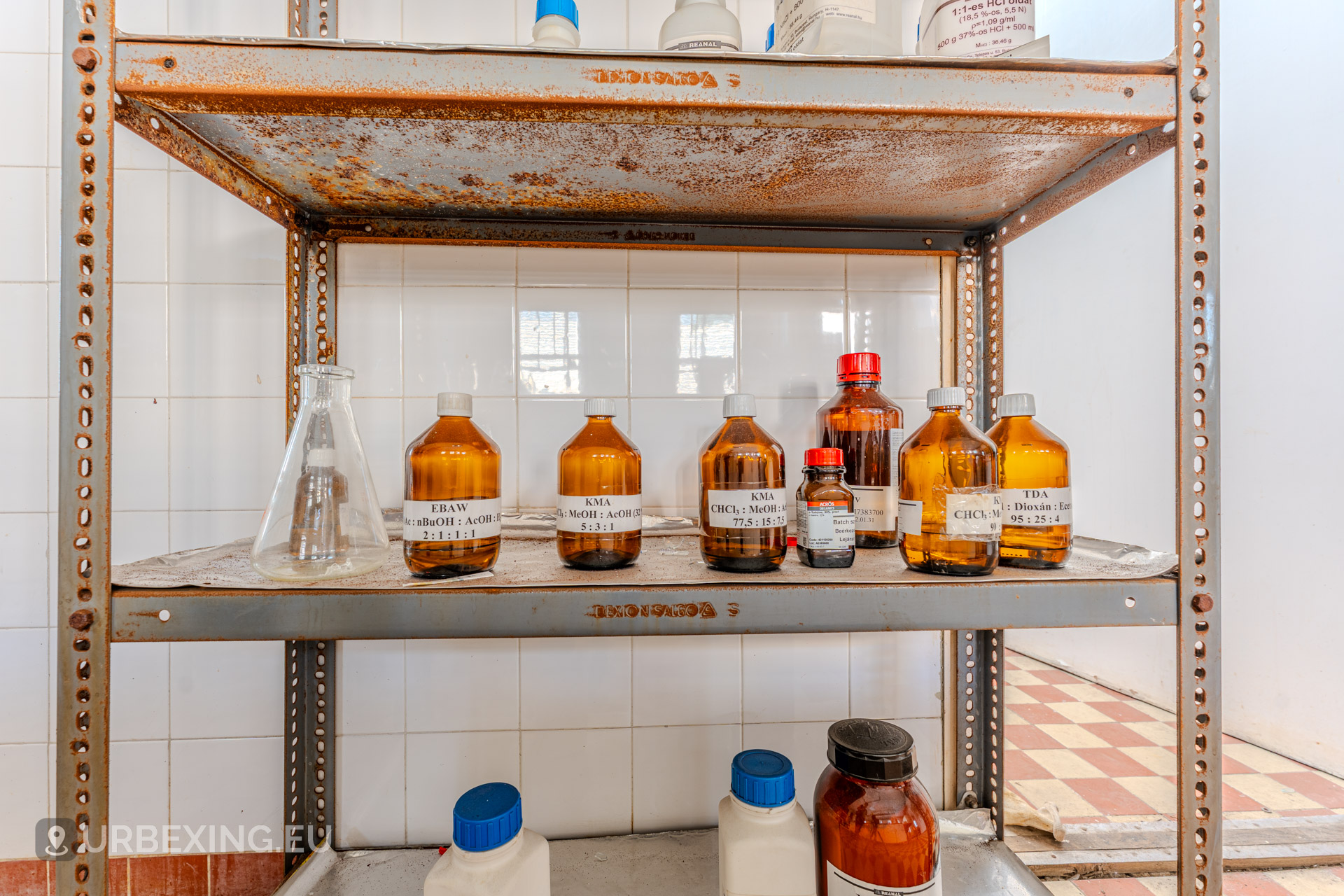
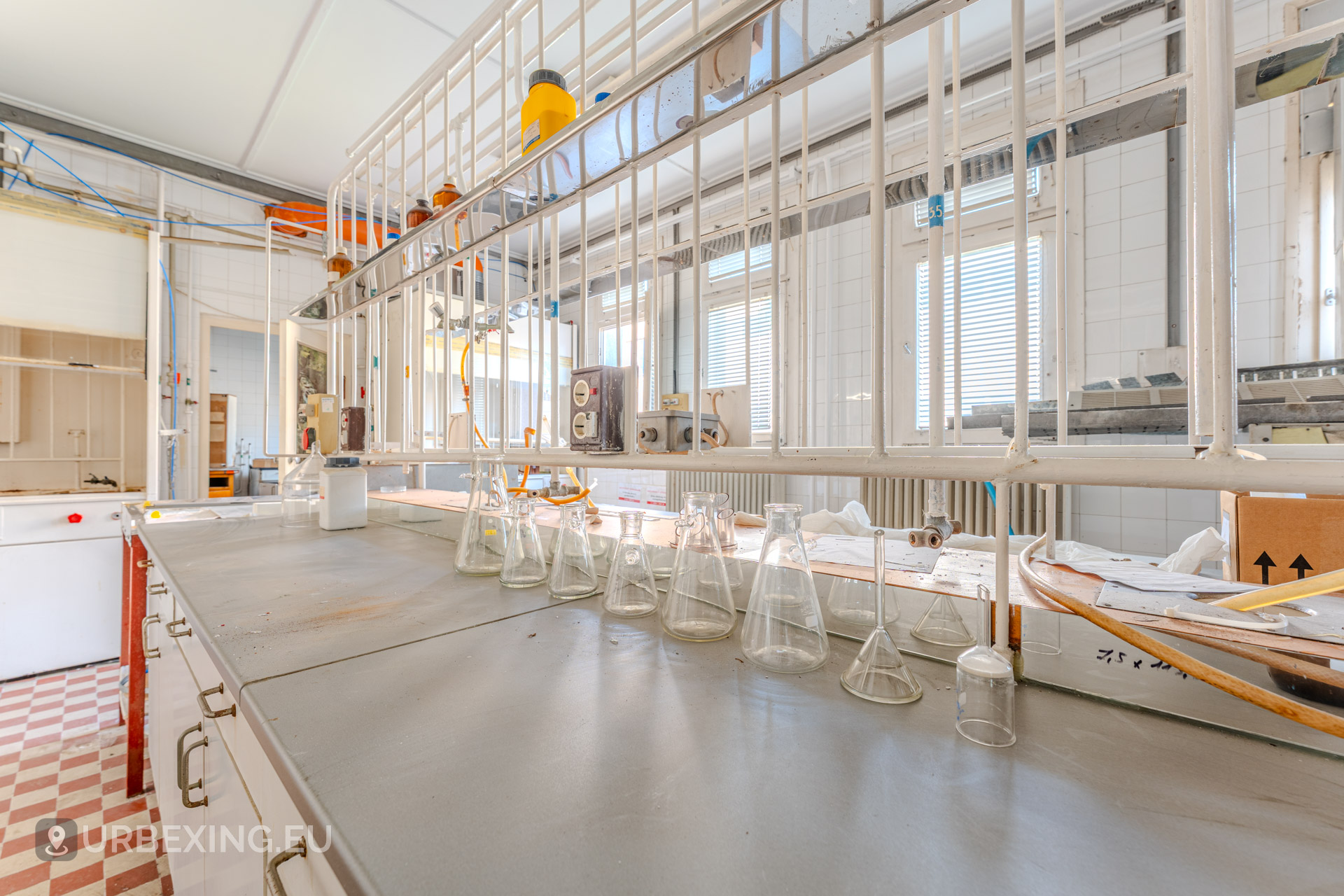
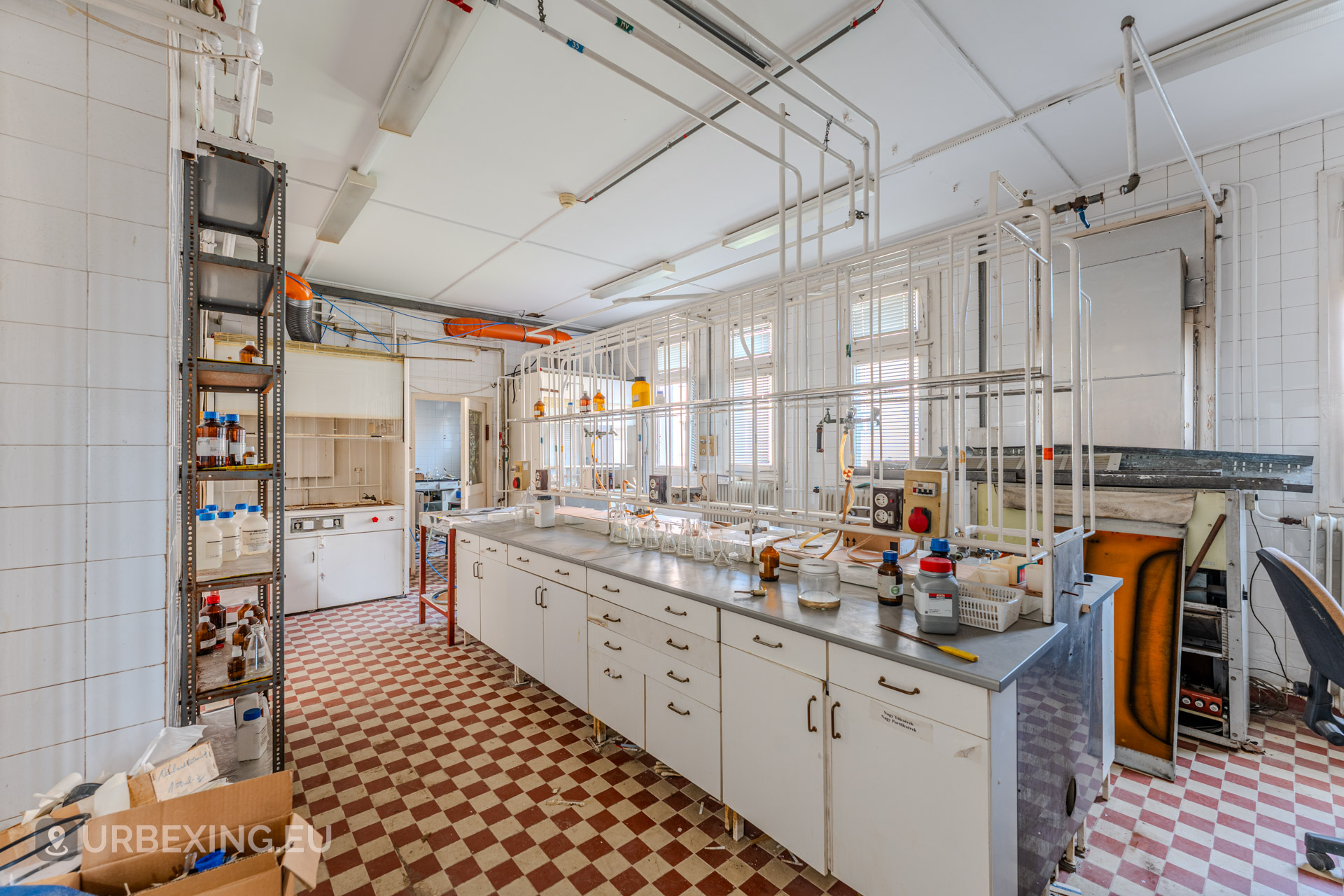
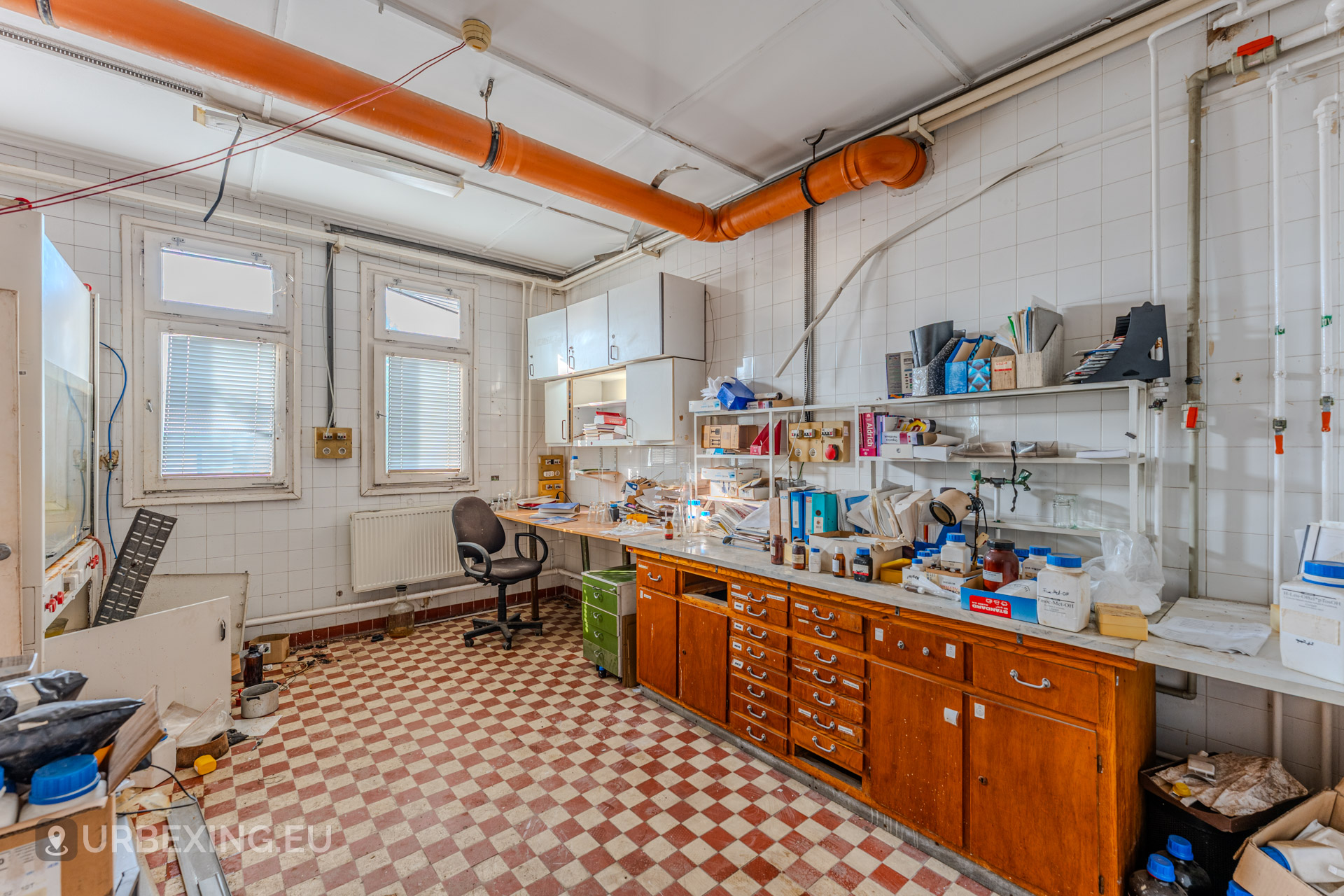
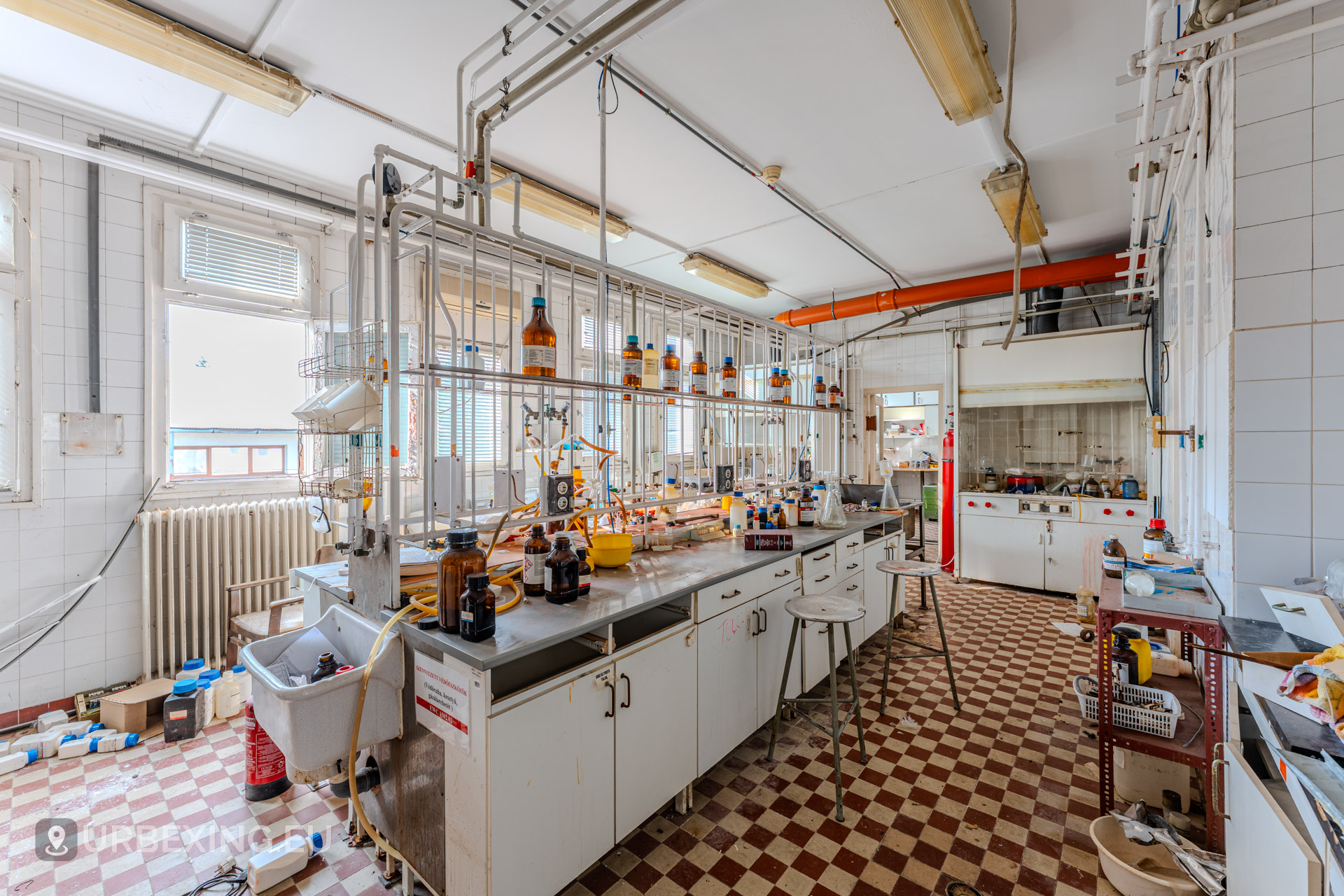
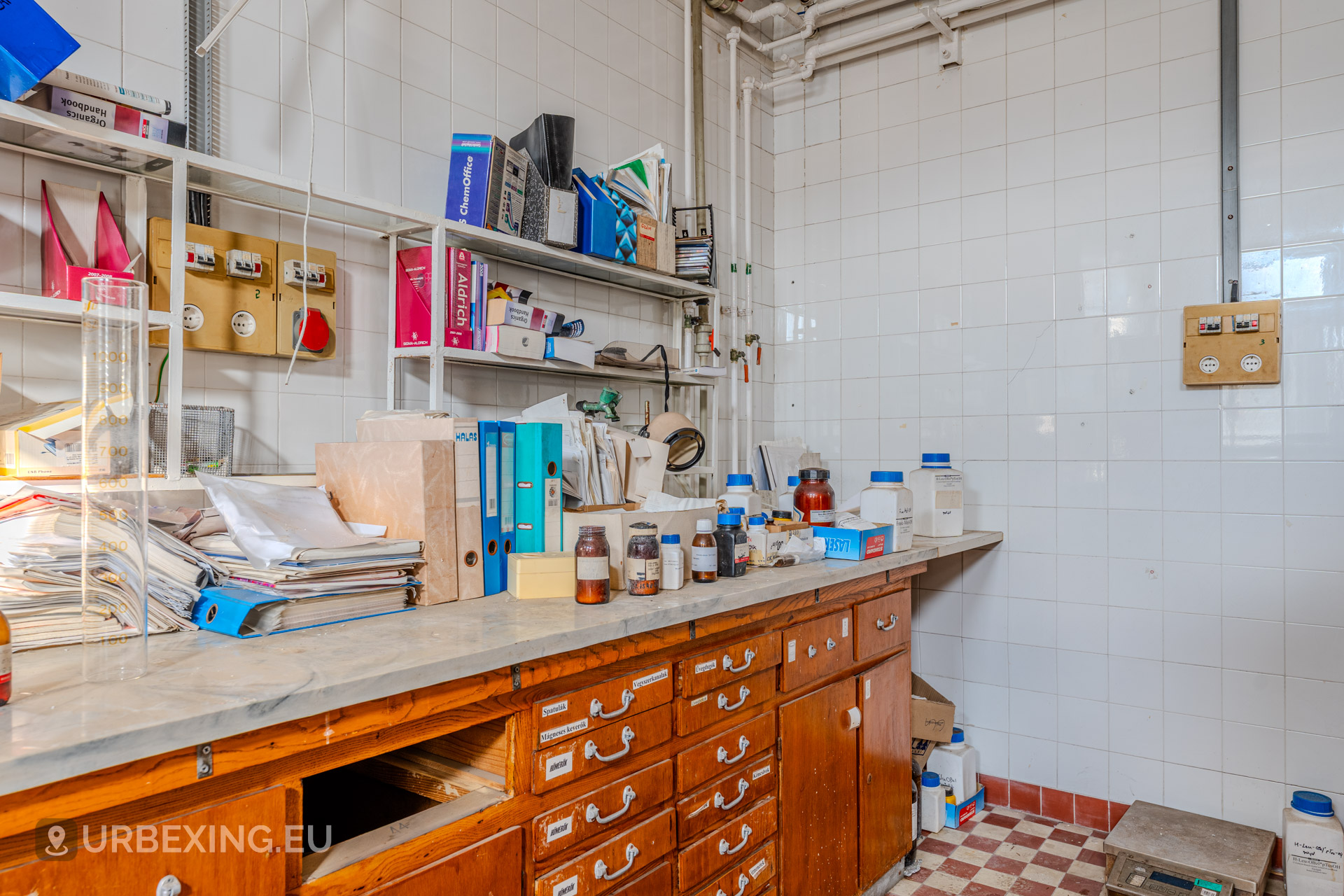
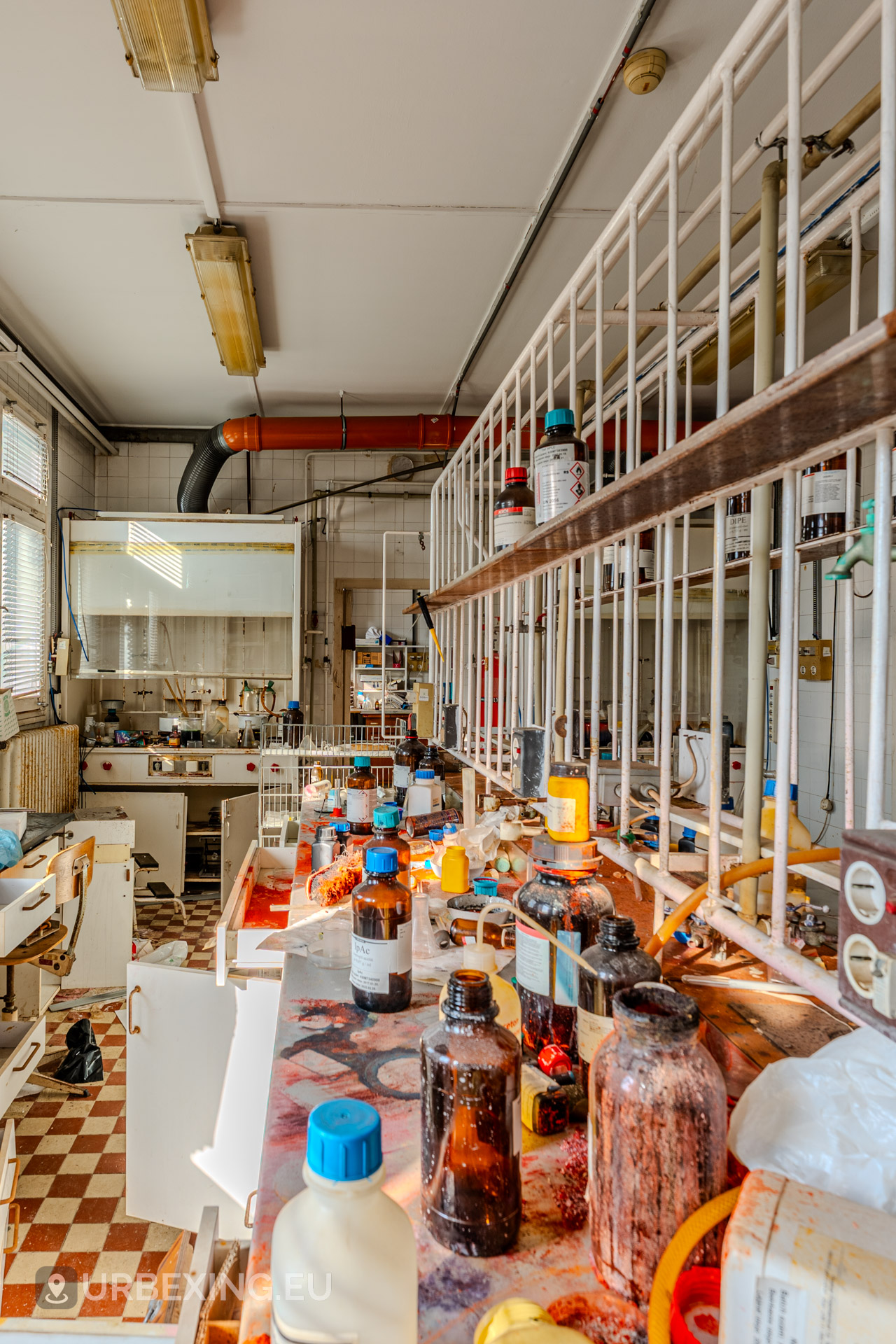
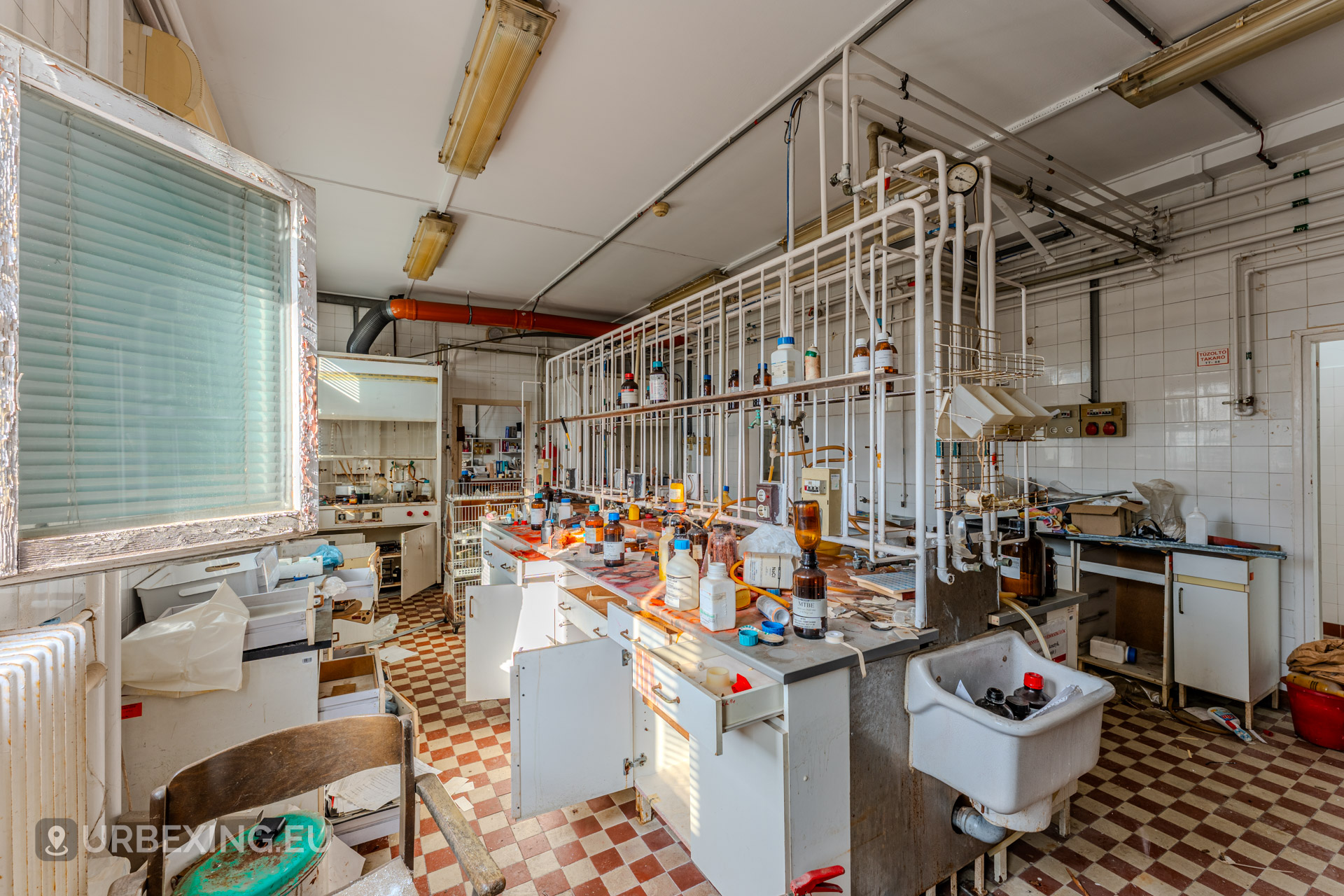
Stepping inside felt completely different from most abandoned industrial sites. This wasn’t about massive machinery or huge empty halls, it was smaller, more detailed, and in a way, more unsettling. Long corridors led to rooms filled with laboratory benches, still cluttered with equipment and materials. Dust-covered glassware, flasks, beakers, and test tubes lined the shelves, many still labeled in faded handwriting. Bottles of chemicals were scattered everywhere, some dried out, others crystallized into unknown substances.
The desks told their own story. Papers were left behind, notebooks filled with handwritten formulas and calculations, as if the people working here had simply walked away. In one room, we came across a fully set-up testing station; pipettes still in place, with stained surfaces showing where experiments had once been carried out. It didn’t feel like a place that had been abandoned years ago, it felt like time had just stopped.
That strange chemical smell followed us through the entire building. It was never overwhelming, but always there; a mix of old solvents, decay, and something harder to identify. It added a constant sense of tension, a reminder that this wasn’t just any abandoned place. We were careful where we stepped and what we touched, knowing that some of the remaining substances could still be unsafe even decades later.
Deeper inside, the silence became almost complete. No wind, no outside noise; just the occasional crunch of glass underfoot. The further we went, the darker and more decayed the rooms became, but everything was still there: benches, bottles, instruments, untouched. Unlike many abandoned factories, this one hadn’t been stripped or vandalized heavily. Maybe the chemicals, and the uncertainty around them, kept people away.
When we finally stepped back outside, the fresh air felt noticeably different, cleaner, lighter. Behind us, the laboratory remained frozen in time, slowly deteriorating but still holding onto its past. The Reanal Finomvegyszergyár may not be the largest or most famous abandoned factory in Europe, but it offers something unique: a rare and almost untouched look into an abandoned laboratory, where science once quietly shaped the world behind closed doors.